
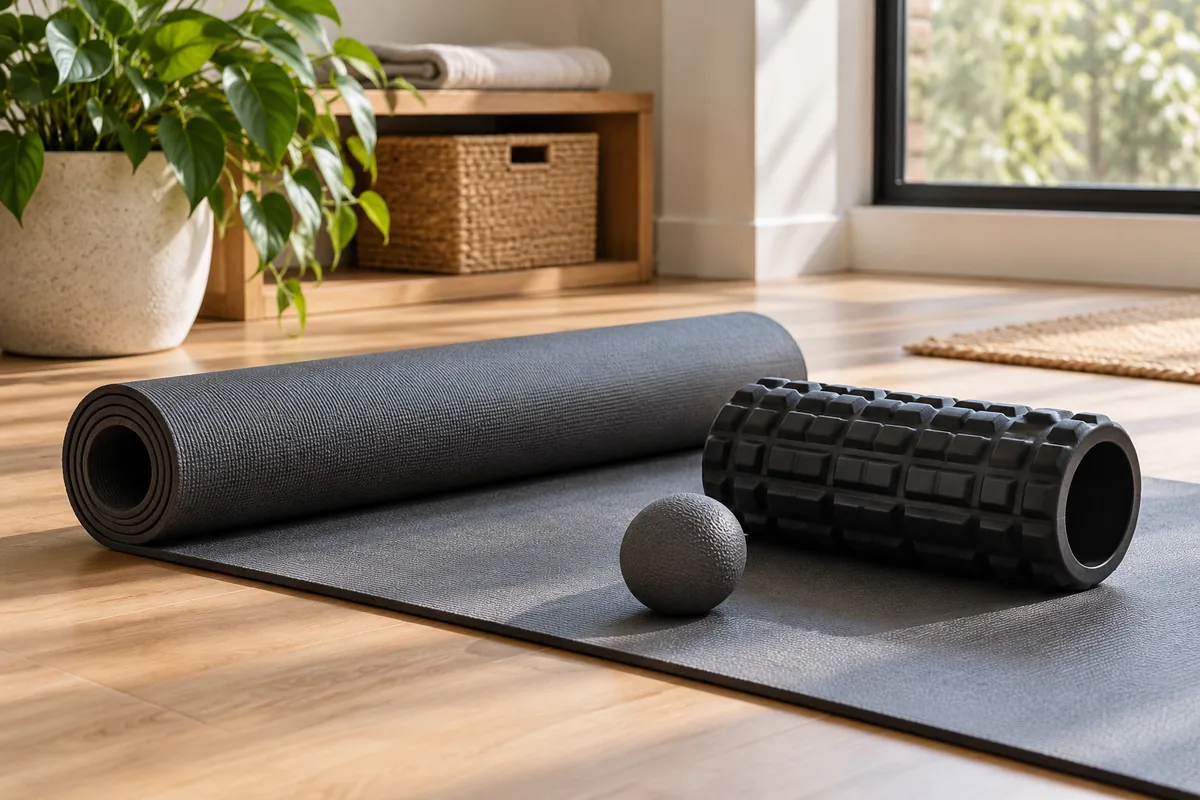
Recovery products often promise a faster return to training, less soreness or better performance. Some may be comfortable or convenient, but those benefits are different questions from whether a particular product changes an objective outcome. A careful purchase starts by translating the claim into something specific that could be tested.
Turn a headline into a question
Ask what outcome is claimed, in whom, after how much use, and compared with what. Feeling temporarily more comfortable, moving through a larger range immediately afterward and recovering performance the next day are distinct outcomes. A change in one does not prove a change in the others. “Clinically tested” alone does not say whether a meaningful benefit was found or whether the actual product was studied.
Locate the cited paper or report rather than relying on a product page’s summary. Check its publication date, funding and whether the author describes limitations. A study in a small group of trained adults may not predict effects for an older beginner, and a laboratory protocol may not resemble home use. An athlete endorsement is a personal account, not a controlled comparison.
Examine the comparison and measurement
A useful comparison might include no intervention, a credible sham or another practical approach. Without an appropriate comparison, an improvement over time could reflect natural recovery, expectation or other changes. See whether participants were assigned randomly, whether assessors knew which group people were in, and whether outcomes were specified in advance. None of these features alone makes a study conclusive.
Look at both the size and duration of an effect. A small short-term average difference may matter to some users, but it does not guarantee that every person notices it. Subjective comfort is a legitimate preference; it should not be presented as proof that tissue has healed. Ask whether results were replicated and whether any adverse effects were recorded.
Read reviews with appropriate caution
A systematic review gathers studies against stated criteria; a meta-analysis can combine their results. Their value still depends on the quality and relevance of included studies. A 2023 review of massage guns included 11 studies, mostly at moderate risk of bias, and reported mixed performance findings. A 2019 foam-rolling meta-analysis described generally small or negligible effects, while a 2022 review found long-term recovery effects unclear.
These reviews concern categories and protocols, not necessarily the model being advertised. Differences in participants, equipment, duration and outcomes make direct product comparisons difficult. An encouraging result in one trial is a reason to look further, not a guarantee. Likewise, an absence of conclusive evidence is not proof that no one finds a tool useful.
Separate marketing from a buying decision
- Claim: Write down the exact promised outcome and time frame.
- Evidence: Identify the actual study, its population, comparison and limitations.
- Match: Check whether it tested the same product and use, or only a broad device category.
- Practicality: Compare comfort, size, setup, cleaning, ongoing costs and return conditions.
- Safety: Read warnings and check relevant current recall notices for the exact model and region.
Be cautious of testimonials presented as proof, vague references to circulation or tissue repair, and dramatic before-and-after comparisons without a clear method. A patented mechanism describes intellectual property, not evidence of clinical effectiveness. A long list of attachments or settings also does not establish that any setting improves a recovery outcome.
Decide what is worth paying for
If a simple roller or a powered device fits your space and feels comfortable, convenience can be a valid reason to buy it. Set a budget that includes accessories and maintenance, and read the return policy before ordering. Do not infer that a more expensive or more intense device produces better outcomes.
Keep expectations modest: a product is optional equipment, not a substitute for adequate rest, appropriate training or care for an injury. Stop if use causes pain or unexpected symptoms, and ask an appropriate health professional when a condition makes use uncertain. The strongest purchase decision combines the evidence with the features you will actually use.
Compare the proposed purchase with the alternatives you already have. If the desired benefit is a comfortable routine, ease of storage and willingness to use the tool may matter more than an elaborate mechanism. If the advertised benefit is a measurable training outcome, look for a relevant study with a meaningful comparison and enough follow-up to address that outcome. These are different standards for different claims.