
Start with setup and space
An indoor rower combines a sliding seat, foot supports, and a handle into a repeated movement. It rewards coordination as well as effort. Before trying to go fast, make sure the machine is stable, the rail is clear, and you have enough room to get on and off. Follow the instructions for the particular model you use; machines vary.
This guide uses Concept2’s published RowErg technique as a reference, not a claim that every rower adjusts identically. Set the foot supports so your feet are secure and the straps sit comfortably; check the manufacturer’s instructions for your shoes and machine. Sit securely and keep the handle and chain moving in a straight path.
Understand the stroke sequence
Concept2 divides the RowErg stroke into the catch, drive, finish, and recovery. Its guidance starts the drive with the legs, followed by the body and arms; the recovery reverses that order. At the finish, the handle comes below the ribs, with a slight backward lean. The manufacturer’s video shows how these positions connect.
Practice at an easy effort while learning the sequence. A knowledgeable instructor can help you notice whether the movement stays coordinated. Use a comfortable range instead of trying to copy another person's exact position, and pause to reset if the rhythm becomes difficult to follow.
Give yourself room to learn
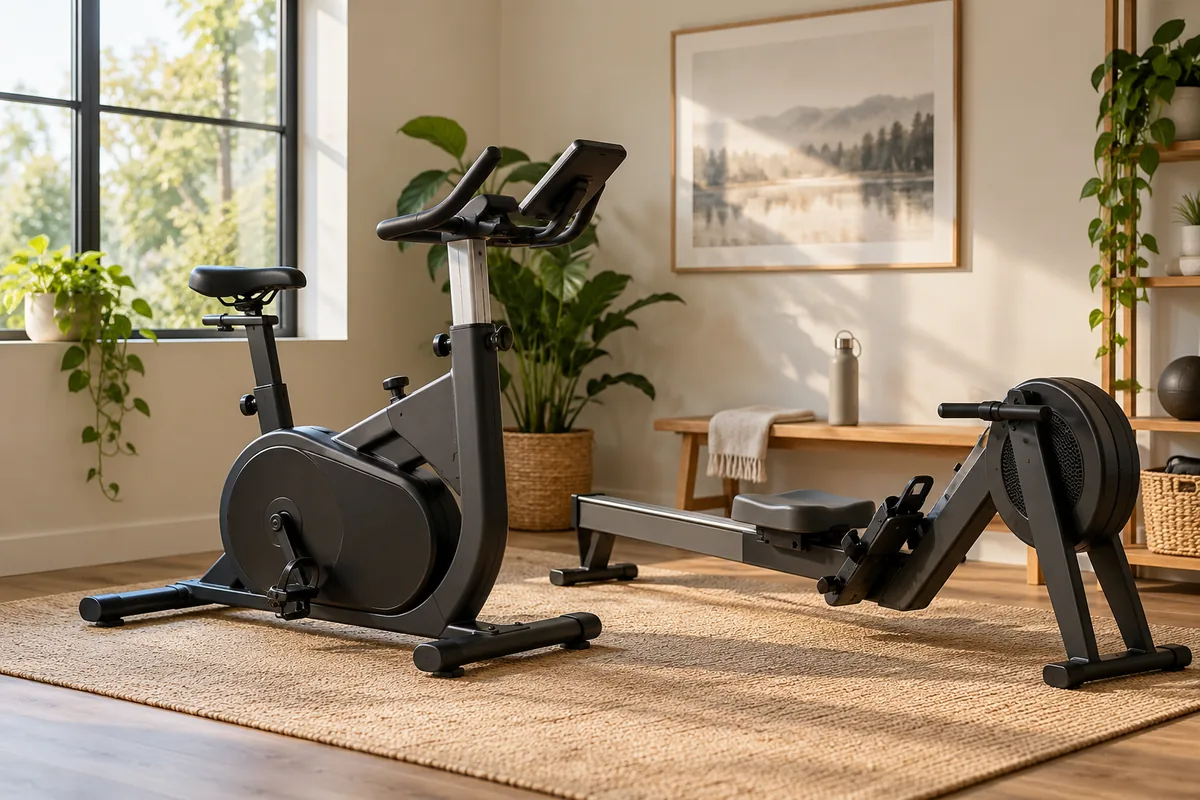
A first session can be a chance to explore the setup rather than a test of speed. Put the machine where the seat has a clear path and you can easily reach its controls. Check that you can see the display without twisting around and that the handle holder is within reach when you finish. An unfamiliar room, crowded gym, or awkwardly placed machine can make concentration harder even when the equipment itself is sound.
- Check the machine is stable and the rail is clear.
- Adjust and secure the foot supports for your shoes.
- Use an easy effort while learning the movement.
- Pause and reset if the sequence becomes difficult to follow.
When comparing practice sessions, notice whether the same setup makes it easier to concentrate. A brief note about the foot adjustment and the space around the machine can help you return to a familiar starting point. If you share a machine, check the adjustments each time; the previous user may have changed them. These practical observations are more useful to a beginner than competing over a screen number.
Understand the damper
On an air rower such as the Concept2 RowErg, the damper changes airflow and the feel of the stroke. It is not a simple fitness level or a guarantee of a harder or better workout at the highest number. Concept2 advises attention to technique and warns against setting the damper too high. Different machines can feel different at the same lever setting.
Use a manageable setting that lets you practice a smooth stroke, and follow the machine’s guidance. Avoid chasing a particular monitor number while learning. A short, controlled practice can tell you more about your setup than an all-out effort. Gradually extend the activity only when it fits your abilities and schedule.
Use comfort and feedback
Check that the strap is secure without being unnecessarily tight, the seat travels freely, and your shoes do not interfere with the movement. Stop and reassess if you cannot maintain the sequence or if equipment feels unstable. Cleaning and maintenance should follow the manufacturer’s instructions rather than an assumed schedule for every machine.
This is general adult education, not rowing coaching, injury treatment, or an individual prescription. If you have symptoms, a condition, or uncertainty about using the machine, seek appropriate advice. Stop if you feel pain or unwell. Learning at a controlled effort leaves more attention for the parts of the stroke that make rowing repeatable.
Read the machine instructions
Before starting on an unfamiliar rower, locate the monitor controls and understand how to stop and leave the machine. Keep fingers and loose clothing clear of moving parts, and do not release a moving handle. After use, return the handle to its holder according to the manufacturer’s instructions. If the machine is shared, report damaged straps, an unstable frame, or other equipment problems to the facility instead of improvising a repair. Seat height, resistance type, and adjustment details differ between models, so check the manual for the machine in front of you.