
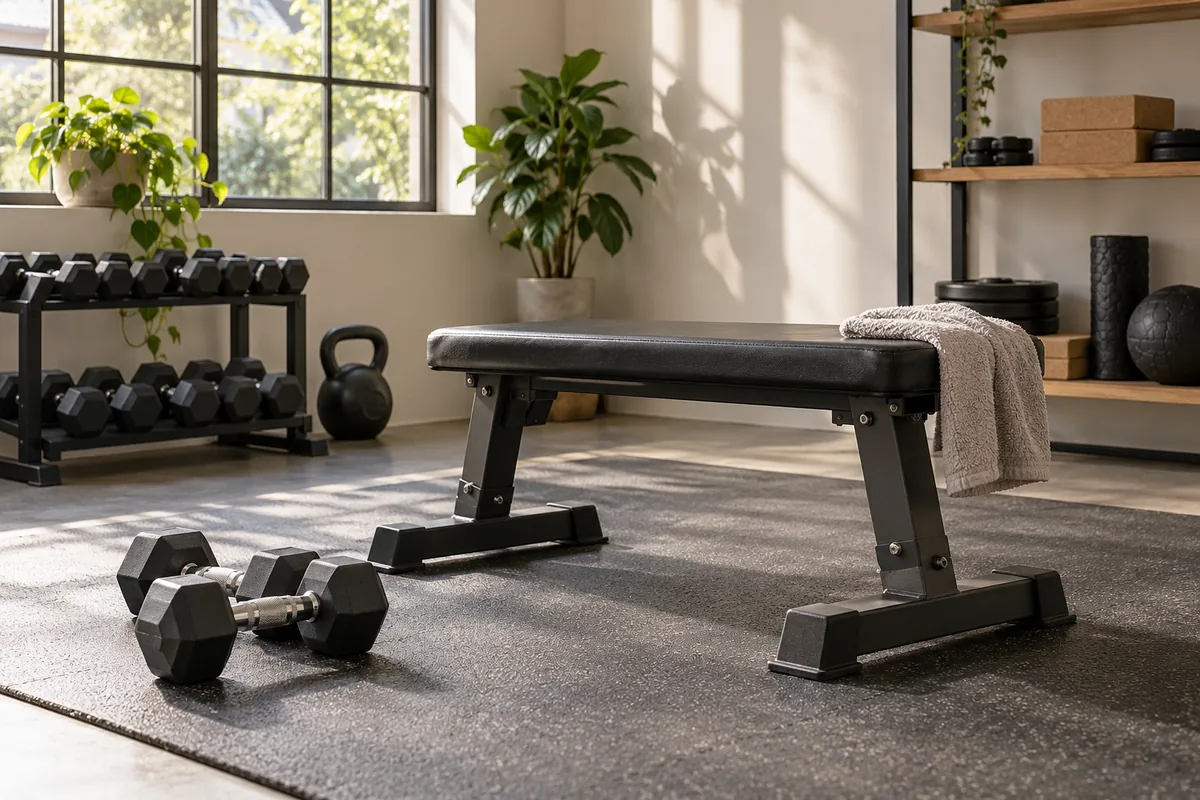
A load is a starting point, not a verdict
A training load is the resistance you work against: a weight, band, machine setting, or body-weight variation. The right starting point lets you learn the movement and repeat it with control. A number that another person lifts says little about the load that makes sense for you, especially when equipment, range, experience, and exercise differ.
The U.S. Physical Activity Guidelines encourage inactive adults to start with smaller amounts and increase activity gradually. The NHS similarly advises building strength work over time. These broad principles are more useful for a beginner than treating a fixed weekly increase as a rule that must be obeyed.
Find a manageable challenge
Try the movement without added resistance or with a light setting first. Check that the equipment is secure and that you can move through a comfortable range. Then increase the challenge cautiously if the initial version is clearly easy and your movement remains steady. For a machine, read the instructions and adjust the seat or handles before comparing stack numbers.
Pay attention to both phases of a repetition. If you must swing to begin, cannot control the return, or change position dramatically to complete it, the challenge may be too high for practice that day. Stopping before movement breaks down provides room to learn. The aim is useful work, not a demonstration of willpower.
What can change over time
Progression can mean more than adding weight. You might complete a movement more consistently, use a more comfortable range, add a repetition, or practice the same work with fewer interruptions. You could also choose a slightly more demanding variation when the existing one is familiar. Each change alters the task, so comparisons are most meaningful when other conditions stay similar.
- Resistance: Increase only when the available increment is manageable.
- Repetitions: Add a small amount while keeping the movement controlled.
- Sets: More work requires more time and recovery; add cautiously.
- Movement: A stable setup or smoother range can itself be progress.
An illustrative example: after several comfortable sessions with a given dumbbell, a person may try one additional repetition, then observe how the session and following day feel. The example is not a universal schedule. Staying at the same level or reducing it may be appropriate when circumstances change.
Read the whole session
One difficult repetition does not tell the whole story. Consider whether your setup was consistent, how demanding the work felt, whether you could recover between sets, and whether the activity fits alongside the rest of your week. A short note is more useful than relying on memory; record the exercise, load, repetitions, and an effort observation.
If a heavier option makes the movement substantially less controlled, return to the earlier load or find a smaller increment. Some adjustable equipment jumps in larger steps than you can comfortably manage. In that case, more practice at the current setting or a different variation can be more useful than forcing the next setting.
Allow room to recover
Recovery is affected by your total activity, sleep, food, stress, and health, not just the last workout. Leave room between demanding sessions and adjust when fatigue affects normal movement or motivation. A missed workout does not require making up every set immediately. Restart at a manageable level after a break.
This is general education for adults. Conditions, symptoms, pregnancy, recent health events, and injuries can change what is appropriate; consult a health professional or qualified exercise professional when needed. Stop if exercise causes pain or makes you feel unwell. Progress is a series of choices supported by feedback, not a promise of a particular result.
Compare like with like
A load number has meaning only alongside the exercise and setup. A machine at one gym may feel different from another with the same displayed number, and a band’s challenge changes as it stretches. Note the equipment and movement range in your log before comparing sessions. If a new setting feels unfamiliar, treat it as a new starting point instead of assuming the old number transfers exactly. Small plates, adjustable dumbbells, or alternative band tensions may offer useful choices, but only if they fit the equipment and are secured as directed.